
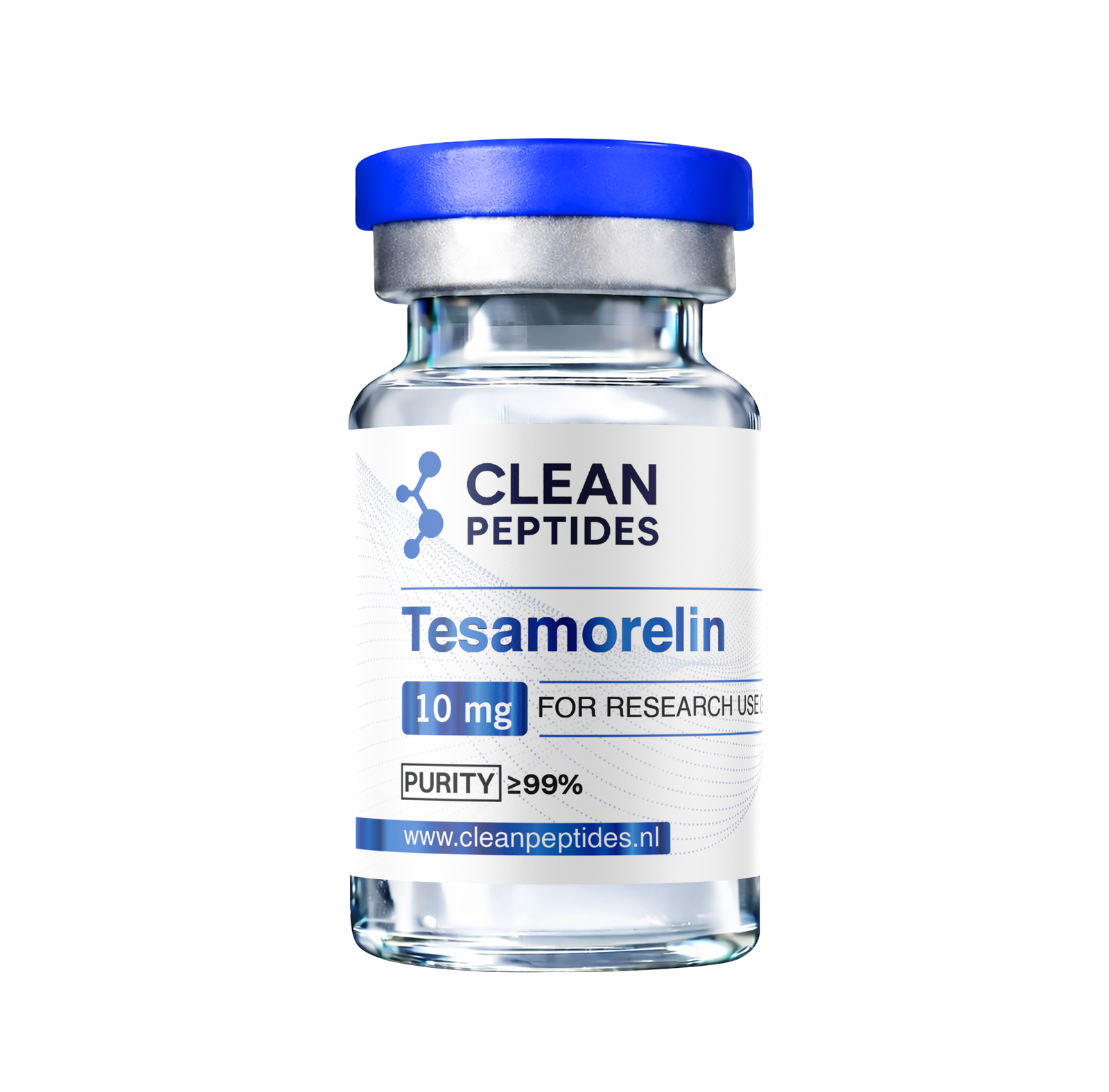

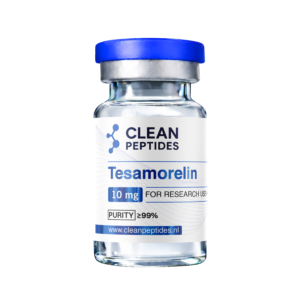
🧪 Tesamorelin 10 mg – Research peptide targeting fat loss, growth hormone stimulation & visceral fat
Tesamorelin is a synthetic peptide belonging to the class of Growth Hormone Releasing Hormone (GHRH) analogues. Within scientific research, Tesamorelin is intensively studied for its ability to stimulate the natural release of growth hormone (GH), which plays an important role in fat metabolism, body composition and energy metabolism.
What makes Tesamorelin special is its specific focus on reducing visceral fat – the fat located deep in the abdominal cavity around organs. This type of fat is often associated with metabolic imbalance within research, making Tesamorelin an interesting research subject within studies of fat distribution and metabolic health.
🔬 Product information at a glance
-
Name: Tesamorelin
-
Quantity: 10 mg
-
Form: Lyophilized (freeze-dried) powder
-
Purity: ≥ 99% (HPLC tested)
-
Peptide type: GHRH analogue (research classification)
⚗️ How does Tesamorelin work?
Tesamorelin functions as an analog of the natural Growth Hormone Releasing Hormone (GHRH). In research models, this peptide binds to specific receptors in the pituitary gland (pituitary gland), leading to an increased release of growth hormone.
Unlike direct administration of growth hormone, Tesamorelin stimulates the body to produce its own GH. Within studies, this provides a more physiological pattern of hormone release, including pulsatile secretion – which is important for natural regulatory processes.
Increased GH levels then lead to an increase in Insulin-like Growth Factor 1 (IGF-1), a key mediator of growth hormone effects. IGF-1 plays a role in fat burning, muscle maintenance and cell repair, so Tesamorelin indirectly affects multiple processes within the body.
🔥 Tesamorelin and fat burning
One of the most studied effects of Tesamorelin is its influence on fat metabolism, particularly in the abdominal region.
Within studies we look at:
-
Stimulation of lipolysis (breakdown of fat cells)
-
Reduction of visceral fat (fat around organs)
-
Improvement of fat distribution in the body
-
Supporting drier body composition
Visceral fat is metabolically active and often responds more strongly to hormonal signals than subcutaneous fat (fat under the skin). Under the influence of increased growth hormone levels, this type of fat is more efficiently harnessed as an energy source in research models.
This makes Tesamorelin particularly interesting within studies focusing on abdominal fat reduction and body composition improvement.
⚗️ What is Tesamorelin being investigated for?
Within research settings, Tesamorelin is widely studied in relation to:
-
Reduction of visceral abdominal fat
-
Stimulation of growth hormone production
-
Improving body composition
-
Fat loss while maintaining muscle mass
-
Metabolic health and energy management
-
IGF-1 related processes
Because of this broad action, Tesamorelin is an important peptide within endocrine and metabolic research.
🧬 Tesamorelin and body composition
Within studies, Tesamorelin is often examined for its unique combination of fat loss and muscle mass preservation. Unlike traditional methods that can reduce both fat and muscle mass, it looks at how increased GH and IGF-1 levels contribute to a more “lean” body composition.
In addition, we are investigating how Tesamorelin affects recovery processes, sleep quality and overall energy, as growth hormone plays an important role in these systems.
🔗 Synergistic action with other peptides
Within research, Tesamorelin is frequently combined with other peptides to analyze additional effects:
-
Ipamorelin / CJC-1295
These peptides are being investigated for their complementary stimulation of growth hormone release. In combination with Tesamorelin, possible enhancement of GH pulsation and IGF-1 response is being examined. -
Metabolic peptides (such as GLP-1/GIP analogs)
Combined metabolic peptides are being used to investigate how fat loss and appetite regulation can reinforce each other, particularly within studies of weight loss and body recomposition.
These combinations make Tesamorelin suitable for advanced research protocols aimed at fat loss and hormonal optimization.
📦 Packaging & storage
-
Contents: 1 vial of Tesamorelin 10 mg
-
Storage: Store cool and dry (2-8 °C), protected from light
The product comes as a lyophilized powder, which ensures stability and preservation of quality during storage.
🌍 Why choose Tesamorelin 10 mg?
-
Focused research on visceral fat and abdominal fat reduction
-
Stimulates natural growth hormone release (GHRH analogue)
-
Interesting for body composition and fat loss studies
-
Supports research on IGF-1 and metabolic processes
-
Commonly used within endocrine and metabolic research
Tesamorelin is thus a powerful and targeted research peptide within studies of fat distribution and hormonal regulation.
🎯 Frequently paired peptides for related research goals Tesamorelin is often studied alongside Ipamorelin / CJC-1295 to examine combined effects on growth hormone pulsatility, and alongside GLP-1/GIP peptides such as Retatrutide in studies exploring fat loss and body recomposition from complementary metabolic pathways. ❓ Frequently asked questions How should Tesamorelin 10mg be reconstituted? The lyophilized powder is typically reconstituted with bacteriostatic or sterile water, added slowly along the vial wall to avoid damaging the peptide structure, then gently swirled (not shaken) until fully dissolved. How is the purity of this Tesamorelin verified? Every batch is HPLC-tested to confirm a purity of ≥99%, consistent with its classification as a GHRH analogue. How should Tesamorelin 10mg be stored? Store the vial in a cool, dry place between 2-8 °C, protected from light, to preserve peptide stability. What comes included with this product? Each order includes 1 vial of Tesamorelin 10 mg. What is Tesamorelin most commonly studied alongside? Researchers frequently pair Tesamorelin with growth-hormone secretagogues such as Ipamorelin/CJC-1295, or with metabolic peptides like GLP-1/GIP analogues, to examine complementary effects on body composition.
⚠️ Important
For research purposes only. Not suitable for human or animal use.
Tesamorelin 10 mg — Reconstitution & Dosage Guide
Reconstitute this 10 mg vial with the supplied 3 mL bacteriostatic water (concentration: 3.33 mg/mL). The standard fixed dose is 2 mg daily, which draws to 60 units on a U-100 insulin syringe. Inject subcutaneously into the abdomen, evening/bedtime, fasted 1–2 hours. Cancer screening and IGF-1 monitoring are required before and during use. For full dosing tables, the Ipamorelin stacking protocol and safety information, see our complete Tesamorelin Dosage Guide.


Reviews
There are no reviews yet