
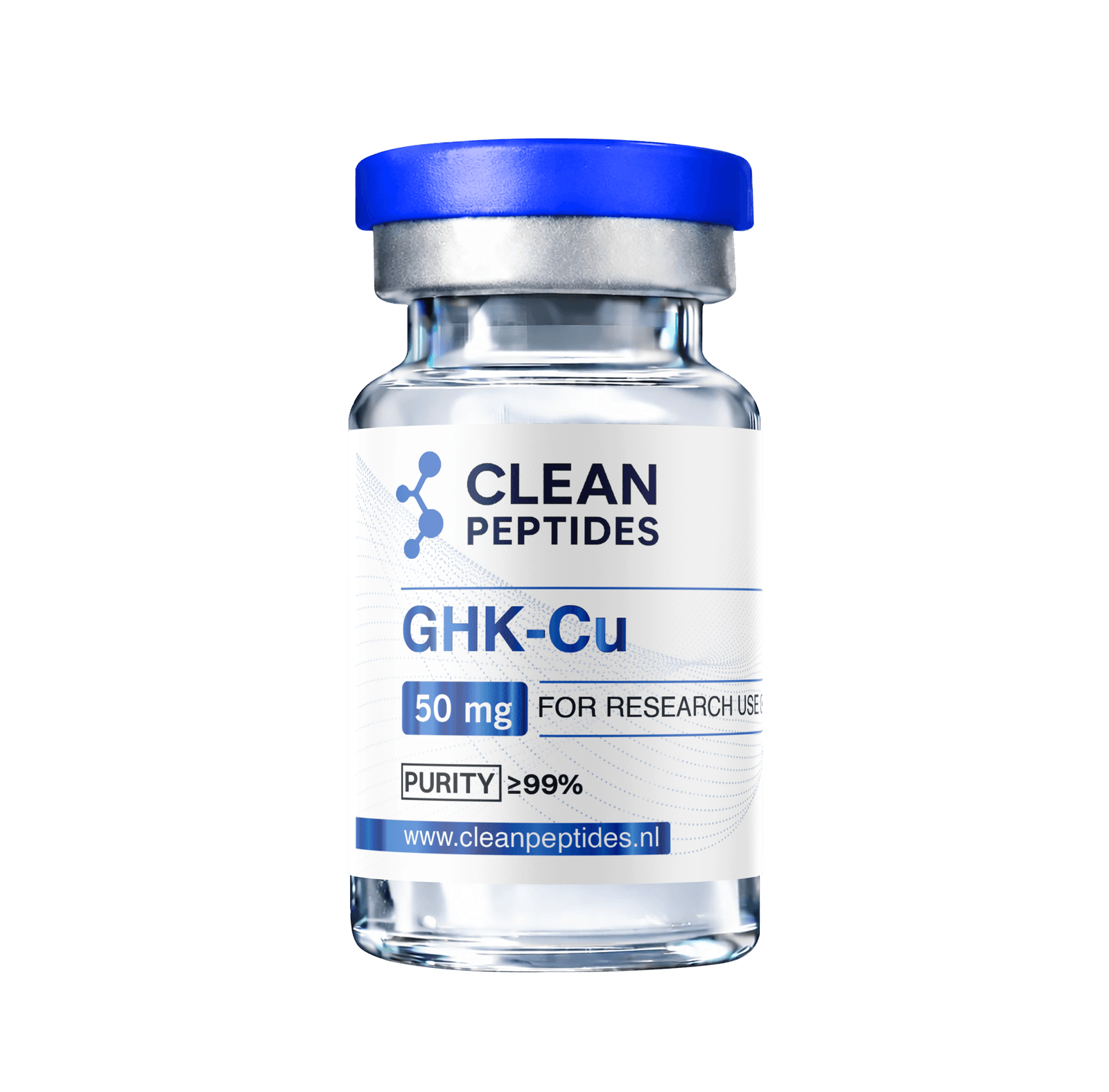
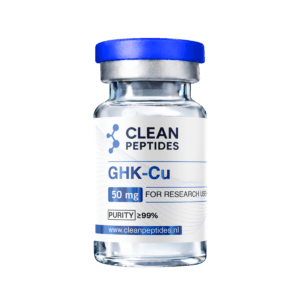
🧪 GHK-Cu 100 mg – Research peptide targeting skin, repair & tissue processes GHK-Cu (Copper Peptide) is a widely discussed research peptide within studies of skin quality, tissue processes and cell communication. The peptide consists of the GHK tripeptide coupled with copper and is being studied in research settings for its role within natural repair mechanisms. GHK-Cu occurs naturally in the human body and decreases with age. This is precisely why it is an interesting research object within studies on skin aging, regeneration and structural support of tissues.
🔬 Product information at a glance
- Name: GHK-Cu (Copper Peptide)
- Quantity: 100 mg
- Form: Lyophilized (freeze-dried) powder
- Purity: ≥ 99% (HPLC tested)
- Peptide type: copper-bound tripeptide
- CAS number: 49557-75-7
⚗️ What is GHK-Cu being investigated for? Within research environments, GHK-Cu is widely studied in relation to:
- Skin structure and skin quality
- Cell renewal and tissue processes
- Support of connective tissue and matrix structures
- Biological processes associated with aging
📦 Packaging & storage
- Contents: 1 vial of GHK-Cu 100 mg
- Storage: Store cool and dry (2-8 °C), protected from light
🌍 Why choose GHK-Cu 100 mg?
- Focused on skin and tissue-related research models
- High concentration, suitable for long-term research projects
- Very high purity and consistent quality
- Popular within regenerative and cosmetic research
⚠️ Important For research purposes only. Not suitable for human or animal use.
🔍 Explanation box: Why GHK-Cu is often investigated together with other peptides
Within regenerative and skin-oriented research, GHK-Cu is regularly considered together with other peptides that each have complementary roles:
- GHK-Cu → focus on skin quality, cell communication and structural processes
- BPC-157 → often studied in relation to tissue repair and regeneration
- TB-500 → is being studied for its role within cell migration and repair mechanisms
By studying these peptides together, researchers gain a better understanding of how:
- skin
- connective tissue
- and recovery processes
can affect each other within one broader biological system.
Intended for research purposes only.
🎯 Which GHK-Cu vial size fits your research? GHK-Cu vials are available in two concentrations. This 100mg vial suits researchers running longer studies or higher-dose protocols, while the GHK-Cu 50mg vial suits shorter or lower-intensity protocols. Researchers studying combined regenerative pathways can also compare this vial with our KLOW80 blend, which includes GHK-Cu alongside BPC-157, TB-500 and KPV. ❓ Frequently asked questions How should GHK-Cu 100mg be reconstituted? The lyophilized powder is typically reconstituted with bacteriostatic or sterile water, added slowly along the vial wall to avoid damaging the peptide structure, then gently swirled (not shaken) until fully dissolved. How is the purity of this GHK-Cu verified? Every batch is HPLC-tested to confirm a purity of ≥99%. How should the vial be stored? Store the vial in a cool, dry place between 2-8 °C, protected from light, to preserve peptide stability. What comes included with this product? Each order includes 1 vial of GHK-Cu 100 mg. What is the difference between the 100mg and 50mg vial? Both contain GHK-Cu at the same purity; the 100mg vial simply offers double the total peptide content of the 50mg vial, useful for longer research protocols without needing to reorder as frequently.
💉 Dosing & Reconstitution Guide
Reconstitute this 100 mg vial with the supplied 3 mL bacteriostatic water (concentration: 33.33 mg/mL). A standard 1 mg dose draws to 3 units on an insulin syringe; 2 mg to 6 units. A blue/blue-green tint after mixing is normal for copper peptides. Standard protocol: 1.0 mg SubQ once daily; topical 1–2% serum for skin goals. Full dosage ranges, reconstitution steps, cycle schedules and stacking protocols: GHK-Cu Dosage Guide.
For research purposes only — not for human use.


Reviews
There are no reviews yet