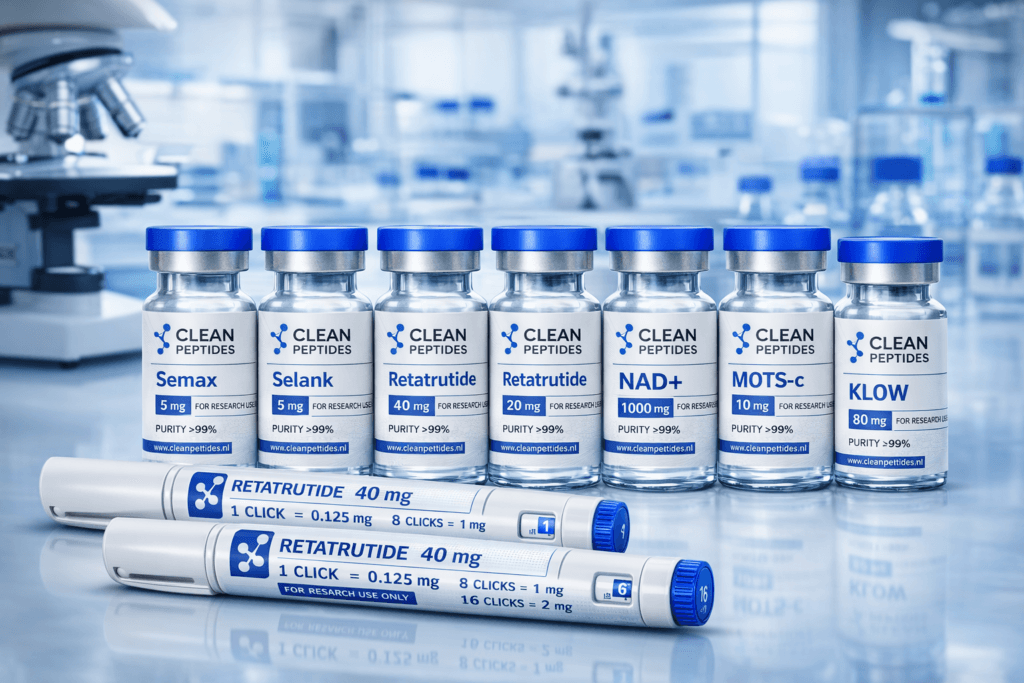
Weight loss, muscle recovery, skin improvement and natural growth hormone stimulation
Peptides – also known as peptides – will be among the most discussed topics within research on health, metabolism, fat burning and performance in 2026.
More and more researchers are looking at peptides because these molecules can activate very specific signals in the body.
This makes peptides interesting for research into:
- weight loss
- fat burning
- muscle growth
- muscle recovery
- skin improvement
- anti-aging
- energy production
In this comprehensive guide, we explain in understandable language:
- what peptides are
- how peptides work in the body
- Which peptides are most commonly studied
- which peptides are popular for fat loss and muscle recovery
What are Peptides?
Peptides are small chains of amino acids.
Amino acids are the building blocks of proteins and play a role in almost all processes in the body.
Whereas proteins often contain hundreds of amino acids, peptides usually consist of 2 to 50 amino acids.
Many peptides occur naturally in the body and function as messengers between cells.
They instruct cells to start certain processes, such as:
- the release of hormones
- burning fat
- muscle recovery
- producing collagen
- regulating energy
You can think of peptides as signaling molecules that tell the body what to do.
Because peptides work in such a targeted way, they are increasingly being explored within studies of:
- weight loss
- muscle building
- skin improvement
- metabolic health
How do Peptides work in the body?
Peptides work through a receptor system.
Every cell in the body has tiny receptors on its surface. These receptors function like locks.
Peptides function as keys.
When a peptide binds to a receptor, a biological signal is activated. This allows a cell, for example:
- release more growth hormone
- burn fat
- repair tissue
- produce collagen
- using energy more efficiently
Because each peptide activates a different receptor, different peptides can have different effects.
This is exactly why peptides are so interesting within modern research.
The best peptides for weight loss
Researchers are particularly interested in peptides that affect metabolism and fat burning.
These peptides can potentially affect:
- appetite
- energy consumption
- fat burning
- blood sugar regulation
Some of the most researched peptides for weight loss are:
Retatrutide
A triple agonist peptide that activates three metabolic receptors.
MOTS-c
A peptide that affects energy production in mitochondria.
Tesamorelin
A peptide that can stimulate the release of growth hormone and possibly affect fat distribution.
Retatrutide – Advanced peptide for metabolism
Retatrutide, also often abbreviated to reta, is currently one of the most discussed peptides within weight loss research.
It acts on three major metabolic receptors:
- GLP-1
- BIP
- glucagon
This combination is also called a triple agonist.
Researchers are studying Retatrutide because it may affect:
- appetite regulation
- fat burning
- metabolic efficiency
- body weight
Retatrutide vial
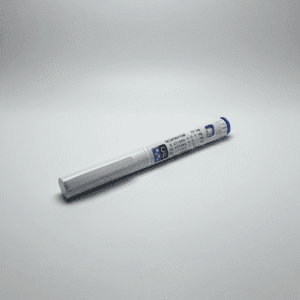
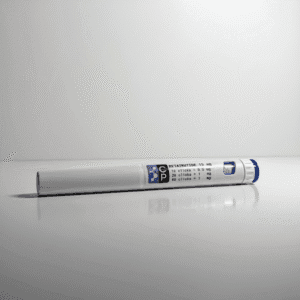
Retatrutide pen
Retatrutide is also available in a pre-filled peptide pen.
A peptide pen makes it easier to use because:
- the dosage is already accurately set
- no reconstitution is required
- injecting becomes faster and easier
This makes peptide pens especially popular for researchers working with daily or weekly doses.
BPC-157 – Peptide for muscle recovery.
BPC-157 is a peptide that has been widely studied for its possible effects on tissue repair.
Research focuses include:
- muscle recovery
- tendon repair
- connective tissue repair
- recovery from minor injuries
The peptide is often investigated in studies of sports recovery and regeneration.
TB-500 – Peptide for regeneration.
TB-500 is a fragment of thymosin beta-4.
The peptide is being investigated because it may affect cell migration and regeneration processes.
Researchers are looking at possible effects on:
- muscle recovery
- restoration of connective tissue
- recovery of tendons
- regeneration of damaged tissue
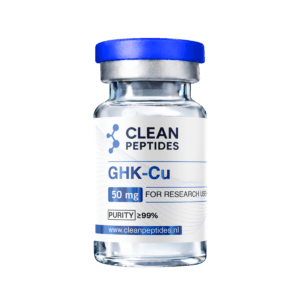
GHK-Cu – Peptide for skin improvement
GHK-Cu is a copper-binding peptide known for its potential role in skin repair and collagen production.
Research focuses on possible effects such as:
- increased collagen production
- improved skin elasticity
- reduction of wrinkles
- faster skin repair
As a result, GHK-Cu is widely researched within skin improvement and anti-aging studies.
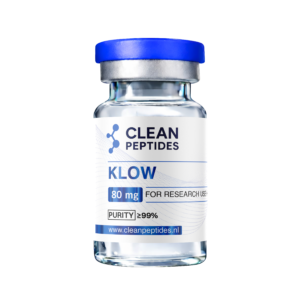
KLOW – Combined peptide stack
KLOW combines several well-known peptides in one formula.
The composition contains:
- BPC-157
- TB-500
- GHK-Cu
- KPV
Through this combination, research focuses on:
- muscle recovery
- tissue regeneration
- skin improvement
KLOW vial
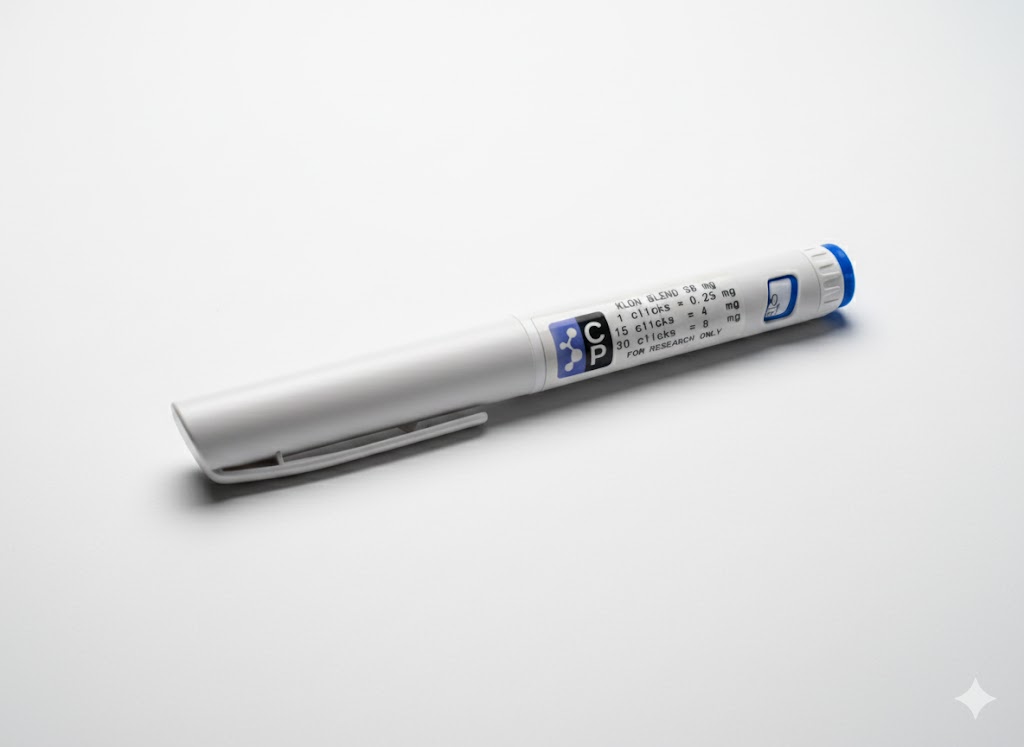
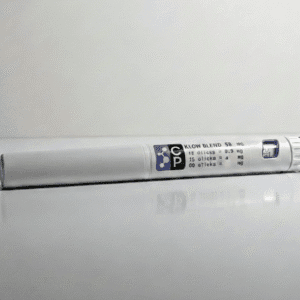
KLOW pen
KLOW is also available as a peptide pen.
The benefits of a peptide pen are:
- easy use
- consistent dosing
- less preparation required
-
KLOW PEN 80 mg (BPC-157 + TB-500 + GHK-Cu + KPV)
Original price was: € 179,95.€ 154,95Current price is: € 154,95. Add to cart
MOTS-c – Metabolism peptide
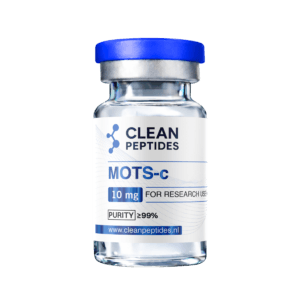
MOTS-c is a special peptide because it is derived from mitochondrial DNA.
Mitochondria are the power plants of the cell.
Researchers are studying MOTS-c because of possible effects on:
- energy production
- metabolic flexibility
- glucose metabolism
- physical performances
NAD+ – Energy and longevity
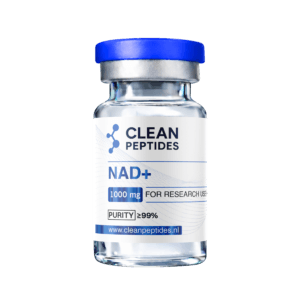
NAD+ is not a peptide but a molecule that plays a crucial role in energy production in cells.
Research focuses on possible effects on:
- mitochondrial function
- energy production
- cell repair
- aging processes
Tesamorelin – Growth hormone peptide
Tesamorelin is a peptide that stimulates the release of natural growth hormone.
Growth hormone plays a role in:
- fat burning
- muscle growth
- recovery
- skin rejuvenation
Researchers are therefore studying Tesamorelin for effects on body composition and metabolism.
Semax – Cognitive peptide
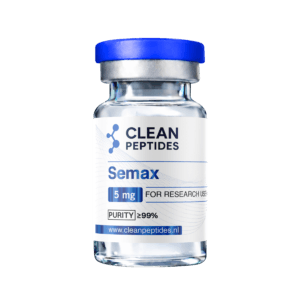
Semax is examined within studies of neurological processes and cognitive performance.
Researchers are looking at possible effects on:
- focus
- mental clarity
- cognitive performances
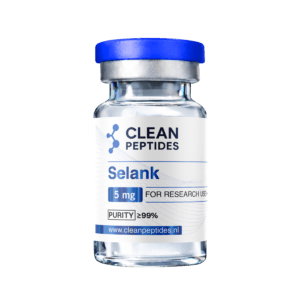
Selank – Peptide for stress regulation.
Selank is being investigated for possible effects on neurological balance and stress regulation.
Researchers study Selank within studies of:
- stress regulation
- cognitive functions
- mental balance
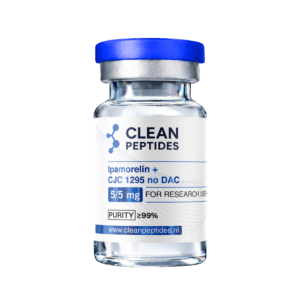
Ipamorelin + CJC-1295 no DAC – Growth hormone stimulation
Ipamorelin and CJC-1295 no DAC are often investigated together.
This combination can affect the natural release of growth hormone.
Growth hormone plays a role in:
- muscle growth
- fat burning
- recovery
- sleep quality
SEO FAQ – Frequently asked questions about Peptides
What are peptides?
Peptides are short chains of amino acids that function as signaling molecules in the body. They direct cells to activate processes such as hormone release, fat burning and recovery.
What peptides are being researched for weight loss?
Peptides often studied for weight loss are:
- Retatrutide
- Tesamorelin
- MOTS-c
These peptides could potentially affect metabolism and energy consumption.
What peptides are being researched for skin improvement?
GHK-Cu is one of the best-known peptides within skin improvement research.
The peptide is being investigated because of possible effects on collagen production and skin elasticity.
What is the difference between a peptide vial and a peptide pen?
A peptide vial usually contains a freeze-dried powder that must first be dissolved.
A peptide pen contains a pre-filled solution that can be used immediately.
Benefits of peptide pens are:
- easy use
- accurate dosing
- less preparation
Are peptides the same as proteins?
No.
Peptides are shorter chains of amino acids, while proteins are much larger.